
Abstract:
This article examines the use of metaphor in legal reasoning, particularly focusing on the "bat and twilight" metaphor used to explain legal presumptions. Through an analysis of key Indian court judgments, especially G. Vasu v. Syed Yaseen Sifudin and subsequent cases, the article explores how this metaphor has been applied to interpret statutory presumptions under the Negotiable Instruments Act. It discusses the evolution of judicial approaches to rebutting such presumptions and highlights both the benefits and potential pitfalls of using metaphorical language in legal contexts.
Introduction:
"Presumptions.... may be looked on as the bats of law, flitting in the twilight, but disappearing in the sunshine of facts."
The quote is a metaphor used in the judgment to illustrate how legal presumptions operate. It is attributed to Cochran, J. in Stumpf v. Montgomery (1924). Presumptions are likened to bats, nocturnal creatures that are active in low light conditions but retreat when exposed to bright light. Twilight represents a state of uncertainty or lack of clear evidence. In legal terms, it's when the facts of a case are not fully illuminated or clear. Flitting suggests that presumptions are active and influential when facts are unclear. They move around, filling gaps in evidence and guiding legal reasoning. Sunshine of facts means clear, strong evidence or well-established facts. When strong evidence (sunshine) comes to light, the presumptions (bats) retreat or cease to be relevant. This metaphor formed the part of reasoning process in the case of G. Vasu.
The Metaphor applied:
G. Vasu v/s Syed Yaseen Sifudin1
2. Imagine a cave where bats (legal presumptions) fly around in the twilight (uncertainty). In this case, the bat is the presumption that a promissory note always has valid consideration. Some courts insisted these bats never left the cave, even when daylight (evidence) streamed in. They said unless you could prove with absolute certainty that no bats existed (no consideration at all), you had to assume bats were still there. This judgment says that's not right. It argues that when enough light (evidence) enters the cave, showing it's more likely than not that there are no bats, we should accept that the bats have flown away. You don't need to prove there's absolutely no dark corner where a bat might hide. In practical terms, this means that if you're challenging a promissory note, you don't need to prove with 1v/s% certainty that there was no consideration. You just need to show it's more likely than not, based on the evidence. Once you've let in enough light (presented enough evidence), the "bat" (presumption) disappears, and it's up to the person with the promissory note to prove that consideration actually existed. This approach makes it fairer for people challenging promissory notes, as they no longer have to prove an absolute negative. It allows courts to look at all the evidence in a more balanced way, rather than relying too heavily on legal assumptions. In essence, this judgment provides a more flexible interpretation of presumptions and proof, allowing for a more balanced approach in evaluating evidence in cases involving negotiable instruments. It emphasizes that presumptions are tools to facilitate legal proceedings, not insurmountable barriers, and should give way to actual evidence when available.
3. The full bench of the Andhra Pradesh High Court dealt with the interpretation of Section 118 of the Negotiable Instruments Act, which creates a presumption that every negotiable instrument was made for consideration. The court held that the words "until the contrary is proved" in Section 118 do not require the defendant to prove with 1v/s% certainty that no consideration existed. Rather, the defendant can rebut the presumption by showing a preponderance of probabilities that consideration did not exist. Once the defendant provides convincing rebuttal evidence, the presumption under Section 118 "disappears" and the burden of proof shifts back to the plaintiff. The defendant can rely on direct evidence, circumstantial evidence, or other legal presumptions to rebut the initial presumption of consideration. The court overruled some previous judgments that had taken a stricter view of the defendant's burden in rebutting the presumption. In this specific case, the court found that the defendant had successfully rebutted the presumption by showing inconsistencies in the plaintiff's claims about consideration. The burden then shifted back to the plaintiff, who failed to prove consideration existed. The appeal was allowed and the suit was dismissed, as the plaintiff ultimately failed to prove consideration for the promissory notes in question.
The key facts of the case:
4. The plaintiff filed a suit claiming that the defendant had borrowed money under two promissory notes dated 1--8--1972: -- Rs. 10,v/s0 under one note (Ex. A-1) -- Rs. 5,v/s0 under another note (Ex. A-3). The defendant denied borrowing any money and claimed that the plaintiff was a pauper without means to lend. They were close friends with a joint business. The promissory notes were obtained without consideration to help the plaintiff misrepresent his financial situation to his parents. During the trial the plaintiff initially claimed cash consideration for the notes. Later, the plaintiff changed his story, admitting no cash was paid for Ex. A-1 and A-3. The plaintiff then claimed that these notes were renewals of earlier notes (Ex. A-9 and A-7). The trial court rejected the plaintiff's initial claim of cash consideration and also rejected the defendant's explanation for why the notes were executed. Accepted the plaintiff's new claim that the notes were renewals of earlier ones. On appeal the court concluded that the plaintiff's new claim about the notes being renewals was not credible, as it wasn't mentioned in the initial suit notice, plaint, or early stages of cross-examination. The court also maintained that the defendant's explanation was not true.
5. This case was then referred to a Full Bench to resolve conflicting precedents on how to apply the presumption of consideration under Section 118 of the Negotiable Instruments Act when both parties' explanations are disbelieved.
Dealing with the precedents:
6. The Bombay High Court view, which was discussed and ultimately disagreed with in this judgment, was established in the case of Tar Mahamed v. Tyed Embrahim (AIR 1949 Bom 257). Basic aspects of this view were:
1) Even if both the plaintiff's and defendant's versions of events regarding the promissory note are disbelieved by the court, the presumption under Section 118 of the Negotiable Instruments Act still operates in favor of the plaintiff.
2) The burden of proving that there was no consideration continues to be on the defendant, even after the plaintiff's story is disbelieved.
3) Unless the defendant can prove with certainty that there was no consideration whatsoever for the promissory note, the presumption under Section 118 remains in effect.
4) This view essentially required the defendant to prove a negative - that no consideration of any kind existed for the promissory note.
5) The Bombay High Court held that the presumption of consideration prevails unless the defendant can conclusively prove the absence of any consideration, not just the absence of the specific consideration claimed by the plaintiff.
7. This view was characterized as an "extreme view" by Wanchoo, C.J. in a later Full Bench decision of the Rajasthan High Court. (Heerachand v/s Jeevraj AIR 1959 Raj1 (FB)).
Justice Wanchoo interpreted the phrase "until the contrary is proved" in Section 118 of the Negotiable Instruments Act in light of the definitions of "proved" and "disproved" in Section 3 of the Evidence Act.He stated that the presumption under Section 118 can be rebutted if the court either believes that consideration does not exist, or considers the non-existence of consideration so probable that a prudent man ought, under the circumstances of the particular case, to act upon the supposition that consideration does not exist.
8. This interpretation allows for the presumption to be rebutted based on a preponderance of probabilities, not just absolute certainty. Justice Wanchoo emphasized that when assessing the probabilities, the entire "circumstances of the particular case" should be considered. The evidence of the plaintiff and defendant should not be considered in separate "watertight" compartments. He rejected the idea that after disbelieving both parties' versions, the court should automatically fall back on the presumption under Section 118. Justice Wanchoo's approach gives more weight to circumstantial evidence and allows for a more holistic evaluation of the case, making it easier for defendants to rebut the presumption of consideration compared to the Bombay High Court's view. This interpretation by Justice Wanchoo was cited approvingly in the G. Vasu judgment and formed part of the basis for the Andhra Pradesh High Court's decision to disagree with the Bombay High Court's approach. This judgment provides an in-depth analysis of presumptions and the word "proved" in the context of Section 118 of the Negotiable Instruments Act and the Indian Evidence Act.
9. The G. Vasu judgment highlights several practical difficulties in accepting the Bombay High Court's view:
1) Proving a Negative: The Bombay view essentially requires the defendant to prove that no consideration of any kind exists. This is a formidable task, as it's inherently difficult to prove a negative.
2) Imagining All Possibilities: The defendant would need to imagine and disprove all conceivable types of consideration. As the judgment asks, "Is he expected to imagine for himself all the conceivable types of consideration and then say that all such possibilities are ruled out?"
3) Unclear Burden of Proof: The judgment points out that it's unclear what exactly the defendant should say in his chief examination to prove that the promissory note is wholly without consideration.
4) Ignoring Circumstantial Evidence: The Bombay view doesn't give adequate weight to circumstantial evidence that might suggest a lack of consideration.
5) Unfair Advantage to Plaintiffs: It creates an unfair advantage for plaintiffs, as they can benefit from the presumption even when their own story about consideration has been disbelieved.
6) Disregard for Probabilities: The Bombay view doesn't allow for a consideration of the preponderance of probabilities, which is a standard approach in civil cases.
8
7) Rigidity in Legal Reasoning: It creates a rigid system where a legal presumption can override actual evidence and the overall circumstances of the case.
8) Potential for Misuse: This approach could potentially be misused to enforce promissory notes that were not actually supported by consideration.
9) Contradiction with Evidence Act: The judgment suggests that this view doesn't align well with the definitions of "proved" and "disproved" in the Indian Evidence Act.
10) Practical Trial Issues: It creates difficulties in how trials should be conducted, particularly in terms of the order and nature of evidence presentation.
These practical difficulties led the Andhra Pradesh High Court to reject the Bombay High Court's view in favor of a more flexible approach that allows for rebuttal of the presumption based on a preponderance of probabilities.
Highlights of reasoning in G. Vasu
10. The G. Vasu judgment refers to Section 3 of the Evidence Act, which defines "proved" as "A fact is said to be proved when, after considering the matters before it, the Court either believes it to exist, or considers its existence so probable that a prudent man ought, under the circumstances of the particular case, to act upon the supposition that it exists." The judgment interpreted the term “Until the Contrary is Proved". It held that the defendant has two options:
a) Show that consideration does not exist, or
b) Show that under the particular circumstances of the case, the non-existence of consideration is so probable that a prudent man ought to suppose that no consideration existed.
11. The judgment emphasizes that rebutting a presumption doesn't require 1v/s% certainty but can be based on a preponderance of probabilities. Even a 51% probability in favor of the defendant's case may be sufficient. Once convincing rebuttal evidence is provided, the presumption "disappears" or becomes "functus officio." The evidential burden then shifts back to the plaintiff. The defendant can use direct evidence, circumstantial evidence, or other legal presumptions to rebut the initial presumption. The judgment acknowledges the practical difficulties in proving a negative (i.e., absence of consideration) and suggests that courts should consider this when evaluating evidence. Distinguishes between "legal burden" (which never shifts) and "evidential burden" (which can shift during trial). The judgment notes that presumptions under this section can be used to rebut the presumption in Section 118 of the Negotiable Instruments Act. Once both parties have led evidence, the question of burden of proof becomes academic, and the court must weigh all evidence to reach a decision.
12. In the context of law the full bench considered the metaphor of “bat and twilight”. Following are the important takeaways of the judgment.
1) Presumptions are useful tools when evidence is scarce or unclear. They provide a starting point for legal reasoning and help courts make decisions in the absence of clear facts.
2) However, presumptions are not meant to override actual evidence. They are temporary measures designed to facilitate legal proceedings until more concrete facts are established.
3) When strong, clear evidence is presented (the "sunshine of facts"), the presumptions should no longer be relied upon. They "disappear" in the sense that they are no longer needed or relevant to the case.
4) This metaphor emphasizes that presumptions, while useful, should not be treated as inviolable rules. They are meant to be flexible and give way to actual evidence when it becomes available.
Evolution of the Judicial approaches: Supreme Court perspective
Bharat Barrel & Drum Manufacturing Company v/s Amin Chand Payrelal2
13. The parties in this case were involved in business dealings related to importing steel drum sheets. In August, 1961 the Defendant offered to arrange import of 10,160 Metric Tons of steel drums sheet from the USA for the Plaintiff. The Plaintiff accepted and stated that shipment had to be made within the validity period of the import licenses. In October, 1961 the Plaintiff requested assurance of timely delivery before opening a letter of credit. The Defendant was asked to provide security for performance of the arrangement. The Defendant executed a promissory note for Rs. 6,20,v/s0/- as collateral security against potential damages for non-supply. When the Defendant failed to repay, the Plaintiff filed suit in the Hon’ble High Court of Calcutta. The Defendant claimed that the promissory note was executed as collateral security and not for any value received. Due to freezing of lakes, the contract could not be performed and was cancelled. The Defendant claimed to be absolved of the liability. The Trial Judge framed four key issues including whether, the promissory note was executed as collateral security and if there was consideration for it.
14. The Trial Judge held that in the circumstances conclusion was irresistible that the promissory note was not executed by way of collateral security as alleged by the Defendant. However, while dealing with the issue No. 2 the Judge referred to the evidence mainly of the Plaintiff and concluded:
"I reject the plaintiff's case that a sum of Rs 6,20,v/s0 was paid to Aminchand Pyarelal at Bombay by the plaintiff on 11-10-1961 by way of loan or at all." It was held that as "on the evidence on record, it has been established that no loan was advanced by the plaintiff to the defendant, the consideration of loan, in my opinion, has been disproved. Therefore, the presumption raised by Section 118 of the Negotiable Instruments Act has been completely dislodged."
Thus the suit was dismissed by the trial Judge of the High Court holding that as the evidence led by the plaintiff and the defendant was not believable; the suit could not be decreed as according to the learned Judge, the appellant had failed to prove its case for being entitled to the grant of the decree. Aggrieved by the judgment of the trial Judge, the plaintiff filed an appeal before the Division Bench of the High Court. In view of the important question of law involved being difficult to answer, the Division Bench referred the entire appeal to a larger Bench. By reason of the majority view, the appeal filed by the appellant-plaintiff was dismissed. Allowing the appeal with costs.
15. In appeal, after referring the various judgments of different High Courts on the point regarding the interpretation of Section 118 of the Act, the Division Bench of the High Court found:
"The point is not free from difficulty. We are satisfied that the learned trial Judge was right in holding that the defendant had been unable to prove the allegations of facts made by him. The plaintiff also did not adduce reliable evidence in support of his contention. The only question that falls for determination is whether in such a situation, the legal presumption raised by the Negotiable Instruments Act will disappear. This question of law in our view must be decided by a larger Bench. We direct the case to be placed before his Lordship, the Chief Justice for setting up a larger Bench to consider this question of law."
16. The appeal was thereafter heard by a Full Bench of the High Court. The judgment agried with the view in G. Vasu. The majority view was:
“although the presumption under Section 118(a) is mandatory but the same being a presumption of law, can be rebutted in certain circumstances. Thus, where relevant evidence (sic) withheld by the plaintiff, Section 114 of the Evidence Act enables the court to draw a presumption to the effect that if produced, it would be unfavourable to the plaintiff. This presumption can rebut the presumption of law raised under Section 118(a). Presumptions can be rebutted not only by direct evidence but also by presumption of law or fact.”
17. The third Judge in the dissenting judgment expressed an opinion that the evidential burden does not shift to the Plaintiff until the Defendant proves that any consideration supported the making and execution of promissory note.
18. When the judgment of the Hon’ble High Court in Appeal came before the Apex Court it observed:
After going through the detailed and lengthy judgments of the learned Judges of the High Court who dealt with the case, we feel that a rational view has not been adopted by anyone. Extreme views taken by the learned Judges in the matter are required to be reconciled on the basis of the law already settled.
19. The Apex Court in the process of reasoning extensively referred to the reasoning and observations made by the full bench of the Andhra Pradesh High Court in G. Vasu v/s Sy. Sifudin AIR 1987 AP 139 (FB). However, the Apex Court remarked,
“We find ourselves in the close proximity of the view expressed by the Full Benches of the Rajasthan High Court and the Andhra Pradesh High Court in this regard.”
20. In the ultimate analysis the Hon’ble Supreme Court held that even though the evidence of Plaintiffs was not believed yet the same could not be made the basis for rejecting the suit claim because the Defendant did not discharge his onus of proof. The Hon’ble Supreme Court observed:
A perusal of the written statement of the defendant would clearly and unambiguously show that to disprove the consideration of the promissory note, he had brought certain circumstances to the notice of the Court which he wanted to probabilise by leading evidence. The evidence led by the defendant in that regard was not accepted by any of the Judges dealing with the case as noticed herein earlier. In the absence of disproving the existence of the consideration, the onus of proof of the legal presumption in favour of the plaintiff could not be shifted. It is true that the plaintiff had produced evidence in the case and that evidence was in fact the evidence in rebuttal of the evidence produced by the defendant in the case. After holding Issue 1 to have not been proved, the High Court was not justified in holding that the defendant had discharged the onus of proof of Issue 2. In fact, both the issues were required to be decided together which was not done with the result that miscarriage of justice crept into the proceedings depriving the plaintiff of its rights on account of the pendency of this litigation in the courts for a period of about four decades now. The technicalities of law and procedural wrangles deprived the plaintiff of its due entitlement. The justice claimed by the plaintiff was buried under heaps of divergent legal pronouncements on the subject conveyed and communicated in sweetly-coated articulate language and the oratory of the persons which is shown to have been resorted to to present the rival claims. The approach adopted by the majority of the Judges in dealing with the case was contrary to the basic principles governing the law relating to negotiable instruments. Faith of the business community dealing in mercantile and trade cannot be permitted to be shaken by resort to technicalities of law and the procedural wrangles as appears to have been done in the instant case. Even though it is true that the plaintiff's evidence was not believed yet we are of the opinion that the same could not be made the basis for rejecting its claim because obligation upon the plaintiff to lead evidence for the purposes of "to prove his case", could not have been insisted upon because the defendant has prima facie or initially not discharged his onus of proof by showing directly or probabilising the non-existence of consideration.
Rajesh Jain v/s Ajay Singh3
21. In its recent judgment the Hon’ble Supreme Court again had an occasion to deal with the scope of presumption under Section 118 and 139 of the Negotiable Instruments Act, 1881. In this judgment the Hon’ble Supreme Court referred to the earlier judgment in the case of Bharat Barrel. The Hon’ble Supreme Court again approved the view of the full bench of the Hon’ble Andhra Pradesh High Court in the case of the G. Vasu v/s Sy. Sifudin. While dealing with the aspect of burden of proof and presumption the Hon’ble Supreme Court observed:
Presumption, on the other hand, literally means "taking as true without examination or proof". In Kumar Exports v. Sharma Carpets, this Court referred to presumption as "devices by use of which courts are enabled and entitled to pronounce on an issue notwithstanding that there is no evidence or insufficient evidence."
39. The standard of proof to discharge this evidential burden is not as heavy as that usually seen in situations where the prosecution is required to prove the guilt of an accused. The accused is not expected to prove the non-existence of the presumed fact beyond reasonable doubt. The accused must meet the standard of "preponderance of probabilities", similar to a defendant in a civil proceeding. [Rangappa v. Sri Mohan]
40. In order to rebut the presumption and prove to the contrary, it is open to the accused to raise a probable defence wherein the existence of a legally enforceable debt or liability can be contested. The words "until the contrary is proved" occurring in Section 139 do not mean that the accused must necessarily prove the negative that the instrument is not issued in discharge of any debt/liability but the accused has the option to ask the Court to consider the non-existence of debt/liability so probable that a prudent man ought, under the circumstances of the case, to act upon the supposition that debt/liability did not exist. (Basalingappa V. Mudibasappa, see also Kumar Exports V. Sharma Carpets)
41. In other words, the accused is left with two options. The first option of proving that the debt/liability does not exist is to lead defence evidence and conclusively establish with certainty that the cheque was not issued in discharge of a debt/liability. The second option is to prove the non-existence of debt/liability by a preponderance of probabilities by referring to the particular circumstances of the case. The preponderance of probability in favour of the accused's case may be even fifty-one to forty-nine and arising out of the entire circumstances of the case, which includes: the complainant's version in the original complaint, the case in the legal/demand notice, complainant's case at the trial, as also the plea of the accused in the reply notice, his Section 313 CrPC statement or at the trial as to the circumstances under which the promissory note/cheque was executed. All of them can raise a preponderance of probabilities justifying a finding that there was "no debt/liability". [Kumar Exports v. Sharma Carpets]
42. The nature of evidence required to shift the evidential burden need not necessarily be direct evidence i.e. oral or documentary evidence or admissions made by the opposite party; it may comprise circumstantial evidence or presumption of law or fact.
22. The Hon’ble Supreme Court in this judgment pinpointed the perversity in the approach of the Trial Court while framing the questions at trial. The Supreme Court observed-
The perversity in the approach of the trial court is noticeable from the way it proceeded to frame a question at trial. According to the trial court, the question to be decided was "whether a legally valid and enforceable debt existed qua the complainant and the cheque in question (Ext. CW I/A) was issued in discharge of said liability/debt". When the initial framing of the question itself being erroneous, one cannot expect the outcome to be right. The onus instead of being fixed on the accused has been fixed on the complainant. Lack of proper understanding of the nature of the presumption in Section 139 and its effect has resulted in an erroneous order being passed.
23. Interestingly the Hon’ble Supreme Court quoted Einstein as follows:
57. Einstein had famously said:
"If I had an hour to solve a problem, I'd spend 55 minutes thinking about the problem and 5 minutes thinking about solutions." Exaggerated as it may sound, he is believed to have suggested that quality of the solution one generates is directly proportionate to one's ability to identify the problem. A well-defined problem often contains its own solution within it.
58. Drawing from Einstein's quote, if the issue had been properly framed after careful thought and application of judicial mind, and the onus correctly fixed, perhaps, the outcome at trial would have been very different and this litigation might not have travelled all the way up to this Court.
61. The fundamental error in the approach lies in the fact that the High Court has questioned the want of evidence on the part of the complainant in order to support his allegation of having extended loan to the accused, when it ought to have instead concerned itself with the case set up by the accused and whether he had discharged his evidential burden by proving that there existed no debt/liability at the time of issuance of cheque.
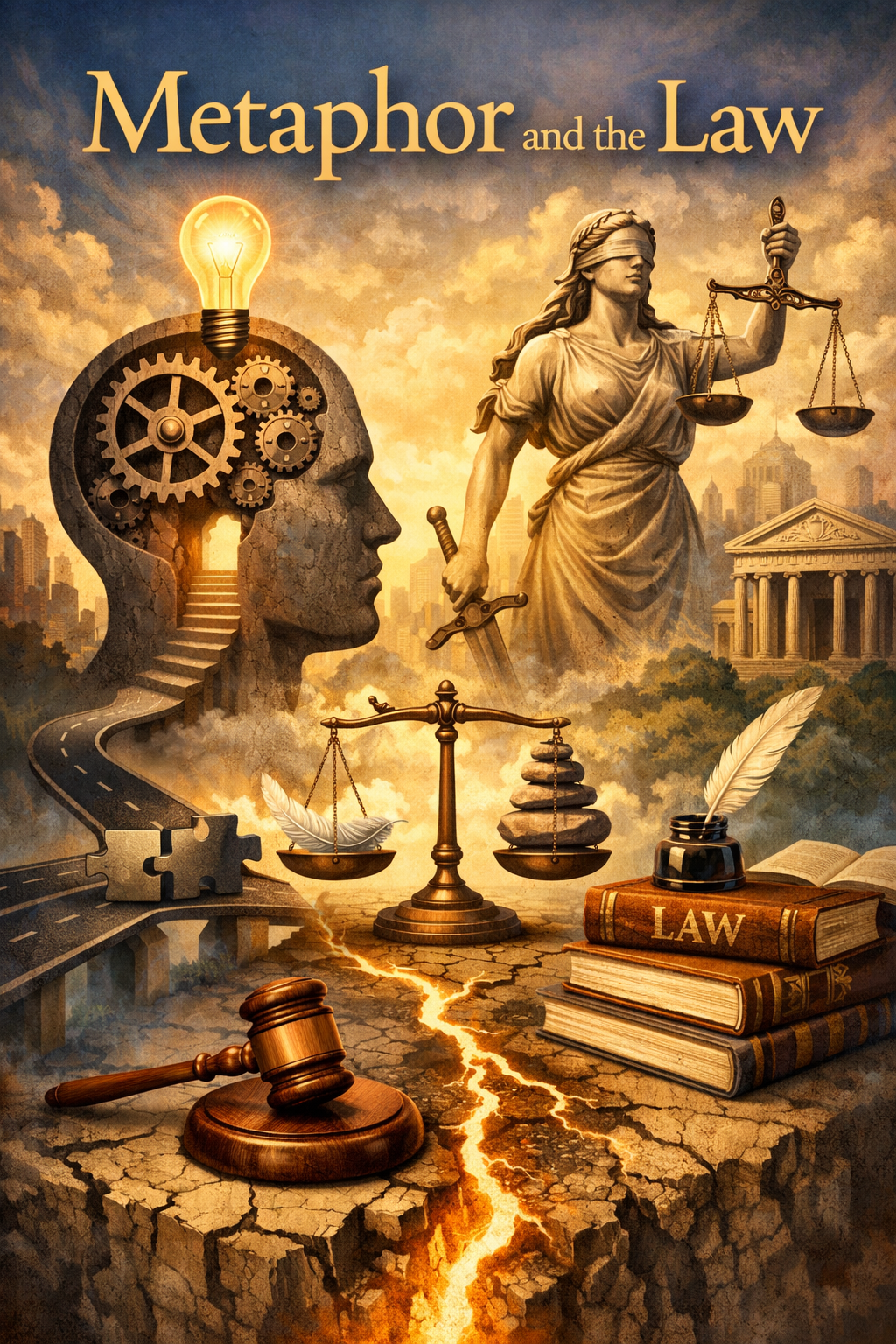
Metaphor and the law
24. While expressing dissenting view (Bharat Barrel v/s Aminchand 1996 SCC Online Cal 110) Hon’ble Justice Ruma Pal made following observation regarding the Metaphor used in the full bench judgment of the Andhra Pradesh High Court in the case of G. Vasu in following terms:
To sum up, my view is that the presumption under Section 118(a) requires the court to be satisfied by proof that no consideration whatsoever has passed irrespective of the consideration alleged. Only then would the presumption be rebutted. Such proof may be circumstantial or direct. It may include an admission or be based on a legal presumption. But the rebuttal must establish the universal negative by establishing or rendering probable a case which is inconsistent with the presumption of any consideration at all.
The rather picturesque metaphor quoted by the Full Bench in G. Vasu viz. 'presumptions may be looked on as the bats of law flitting in the twilight but disappearing in the sunshine of facts' was in my view incorrectly appreciated. If at all a legal question of interpretation can be resolved by reference to a metaphor, it would appear that by the plaintiff's failure to establish his case or by the defendant demolishing the plaintiff's case, all that happens is that a part of the twilight may disappear in the sunbeam of that particular fact leaving sufficient gloom for the bats of presumption to continue to flit with undiminished vigour."
25. The judicial opinion is not just a reflection of an opinion and a representation of authority, but also a device that must persuade while maintaining the legitimacy of the legal system.
The aim of the metaphor may not be simply pedagogic: it can be misleading and manipulate the recipient. Why? Because language mirrors the way we see the world and conversely, the way we look at things depends on how we speak of them. In other words, language can narrow or at least circumscribe our understanding of reality - a feature that logically also characterises.
26. Metaphor is simply rhetorical devise used for convincing a point in a memorable way. Metaphors may be used for expansive interpretation of a legal concept.
27. In fact, it is the ability of metaphor to "give names to nameless things" to put an abstraction into concrete terms that has led to the prevalence of metaphor in doctrinal law. However, a metaphor cannot possibly capture the true meaning of, and all the dimensions and nuances implicated by, an abstract legal concept. Indeed, it is this allure of metaphor combined with its potential pitfalls that led renowned jurist Benjamin Cardozo to his famous criticism of metaphors in doctrinal law: "Metaphors in law are to be narrowly watched, for starting as devices to liberate thought, they end often by enslaving it.
28. Critique of the Metaphor:
While metaphors can be powerful tools for explaining legal concepts, they also have limitations:
1. They may oversimplify complex legal principles.
2. There is a risk of the metaphor being taken too literally.
3. As noted by Benjamin Cardozo, "Metaphors in law are to be narrowly watched, for starting as devices to liberate thought, they end often by enslaving it."
29. Conclusion:
The "bat and twilight" metaphor has played a significant role in shaping judicial understanding of legal presumptions in India. While it has helped elucidate the nature of presumptions, courts must be cautious not to let the metaphor overshadow the nuanced application of legal principles. As legal reasoning continues to evolve, it is crucial to strike a balance between the use of illustrative language and rigorous legal analysis.
Reference :-
1) G. Vasu v/s Syed Yaseen Sifudin : AIR 1987 AP 139 (FB)
2) Bharat Barrel & Drum Manufacturing Company v/s Amin Chand Payrelal (1999) 3 Supreme Court Cases 35 : 1999 SCC OnLine SC 188
3) Rajesh Jain v/s Ajay Singh (2023) 10 Supreme Court Cases 148 : (2023) 4 Supreme Court Cases (Civ) 567 : (2024) 1 Supreme Court Cases (Cri) 1 : 2023 SCC OnLine SC 1275
4) Stumph v/s Montgomery (1924) 101 OKL 256
5) Heerachand v/s Jeevraj AIR 1959 Raj 1 (FB)
6) Tar Monammad AIR 1949 BOM 257
7) Bharat Barrel v/s Aminchand Payarelal : 1996 SCC Online Cal 110
8) Levels of Metaphor in Persuasive Legal Writing by Michael R. Smith
9) Metaphors in English for Law : Let Us Keep Them!
– Isabelle Richard
Electronic version
URL: http://journals.openedition.org/lexis/251
DOI: 104v/sv/s/lexis 251
ISSN: 1951-6215
10) Metaphors and Models in Legal Theory – Finn Makela
URL: https://id.erudit.org/iderudit/1v/s6668ar
DOI: https://doi.org/107202/1v/s6668ar
Written By: Uday Balkrishna Shukla
Designation: Principal Secretary and S.L.A. Law and Judiciary Department