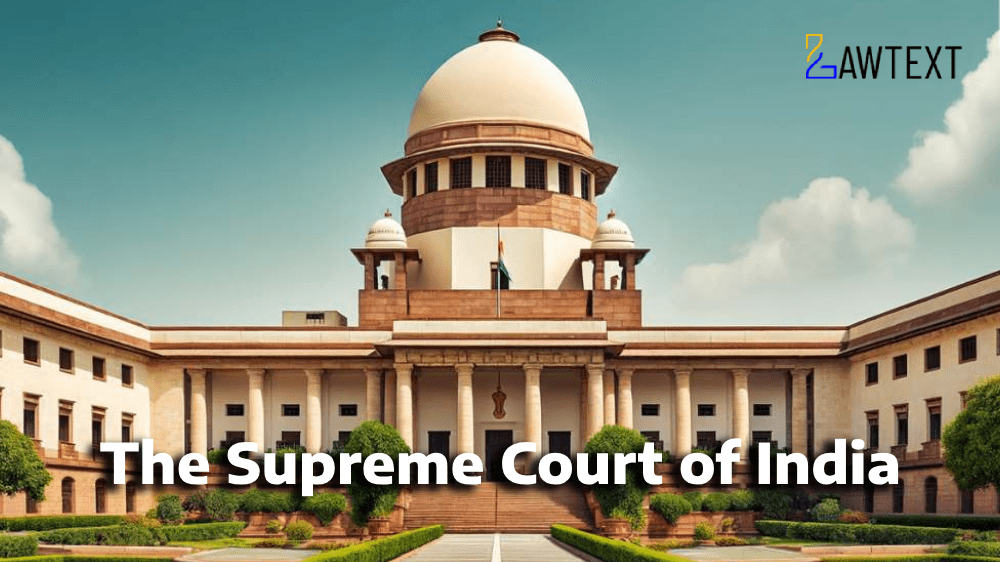
Case Note & Summary
The Supreme Court considered appeals against a common judgment of the Madras High Court which, in exercise of its second appellate jurisdiction under Section 100 of the Code of Civil Procedure, 1908 (CPC), had allowed second appeals filed by the original plaintiff (S. Ramasamy) and decreed partition of suit properties. The original defendant (S. Subramanian) appealed to the Supreme Court. The dispute pertained to immovable properties claimed by the plaintiff as joint family properties, while the defendant contended they were self-acquired properties of their father, Sengoda Gounder, who had executed settlement deeds and a will in favor of the defendant. The trial court and first appellate court had concurrently dismissed the plaintiff's suits for injunction and partition, holding that no joint family existed and the properties were not ancestral. The High Court framed four substantial questions of law, including whether the courts below erred in not treating the properties as blended with ancestral properties, and whether the settlement deeds and will were valid. The High Court reappreciated the evidence, concluded that the properties were joint family properties, and directed a preliminary decree for partition allotting half share each to the plaintiff and defendant. The Supreme Court held that the High Court exceeded its jurisdiction under Section 100 CPC by reappreciating the entire evidence and substituting its own findings for those of the courts below. The Court reiterated that a second appeal lies only on substantial questions of law, and the first appellate court is the final court on facts. The findings of fact recorded by the courts below were not shown to be perverse or contrary to evidence. The Supreme Court set aside the High Court's judgment and restored the concurrent findings of the trial court and first appellate court dismissing the suits.
Headnote
A) Civil Procedure - Second Appeal - Section 100 CPC - Substantial Question of Law - The High Court in a second appeal can only entertain appeals on substantial questions of law and cannot reappreciate evidence as if it were a first appeal. The findings of fact recorded by the first appellate court are final unless perverse or contrary to evidence. (Paras 6-10) B) Civil Procedure - Second Appeal - Reappreciation of Evidence - The High Court exceeded its jurisdiction under Section 100 CPC by reappreciating the entire evidence and substituting its own findings for those of the trial court and first appellate court, which had concurrently dismissed the suit. (Paras 6-10) C) Hindu Law - Joint Family Property - Blending - The question of whether suit properties were blended with ancestral properties is a question of fact, not a substantial question of law. The High Court erred in treating it as a substantial question of law. (Paras 6-10) D) Civil Procedure - Order 2 Rule 2 CPC - Bar on Subsequent Suit - The High Court held that the cause of action for partition is a continuing one, and thus the bar under Order 2 Rule 2 CPC does not apply. (Para 4.3)
Issue of Consideration
Whether the High Court was justified in reappreciating the entire evidence and interfering with concurrent findings of fact while exercising jurisdiction under Section 100 of the Code of Civil Procedure, 1908 (CPC) in a second appeal.
Final Decision
The Supreme Court allowed the appeals, set aside the impugned judgment and order of the High Court, and restored the common judgment and decree of the trial court and first appellate court dismissing the suits.
Law Points
- Section 100 CPC
- Second appeal only on substantial question of law
- Reappreciation of evidence impermissible
- First appellate court is final court on facts
- Blending of property
- Joint family property
- Order 2 Rule 2 CPC
- Continuing cause of action for partition