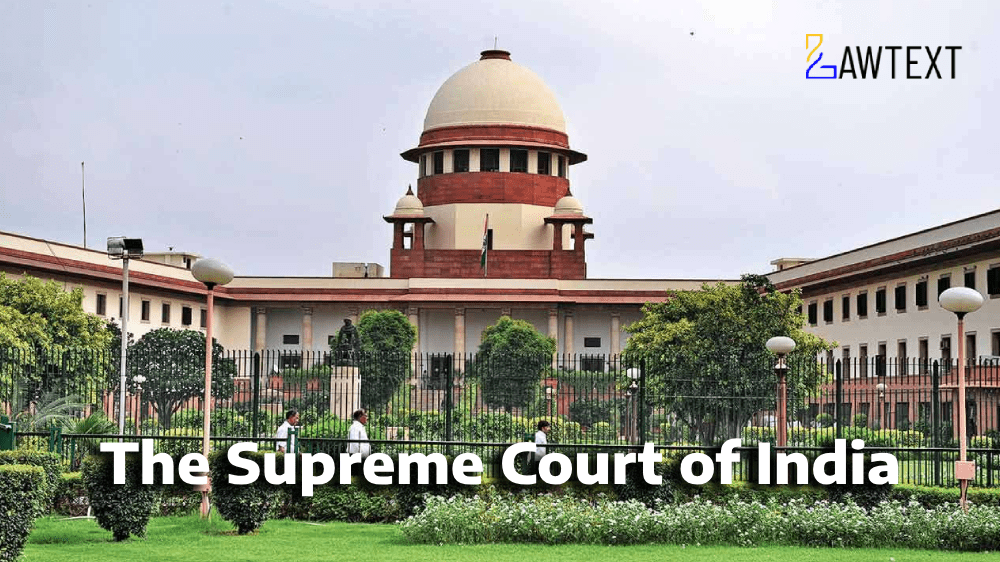
Supreme Court Quashes Bail Order in Companies Act Case, Clarifying Statutory Bail Under Section 167(2) CrPC. The Court held that filing of complaint before expiry of prescribed period extinguishes right to statutory bail, regardless of cognizance being taken, under Section 167(2) of Code of Criminal Procedure, 1973.

  • 4
Judgement Image
Font size:
Print

Case Note & Summary

The Supreme Court heard an appeal by the Serious Fraud Investigation Office (SFIO) against a bail order dated 31.05.2019 passed by the High Court of Punjab and Haryana, which had granted bail to two directors of Adarsh Group of Companies and LLPs. The directors were arrested on 10.12.2018 following an investigation ordered under the Companies Act, 2013 and Limited Liability Partnership Act, 2008 into alleged fraud offences. They were remanded to judicial custody on 05.04.2019, and their custody was extended multiple times. On 18.05.2019, a criminal complaint under the Companies Act was filed before the Special Court, Gurugram, before the expiry of the 60-day period from remand. The directors filed applications for statutory bail under Section 167(2) of the Code of Criminal Procedure, 1973 on 20.05.2019, which were dismissed by the Sessions Judge on 22.05.2019 on the ground that the complaint was filed before the expiry of 60 days. However, the High Court granted bail on 31.05.2019, holding that the directors were entitled to statutory bail as a matter of indefeasible right because cognizance had not been taken before the expiry of the 60-day period. The sole legal issue before the Supreme Court was whether an accused is entitled to statutory bail under Section 167(2) CrPC on the ground that cognizance has not been taken before the expiry of the prescribed period from remand. The appellant SFIO argued that the High Court erred, as statutory bail is only available if investigation is not completed within the period, not if cognizance is not taken, and cited Suresh Kumar Bhikamchand Jain v. State of Maharashtra & Anr. The respondents argued that the High Court was justified, relying on Sanjay Dutt v. State and Mohamed Iqbal Madar Sheikh & Ors. v. State of Maharashtra, contending that the right to statutory bail persists until cognizance is taken. An intervenor highlighted conflicting Supreme Court judgments on this issue and sought referral to a larger bench. The Supreme Court analyzed Section 167(2) CrPC, emphasizing that the provision addresses failure to complete investigation within the prescribed period. It held that the right to statutory bail under Section 167(2) CrPC is extinguished once the complaint or charge-sheet is filed before the expiry of the period, regardless of whether cognizance is taken. The Court found the High Court's reasoning flawed, as it overlooked that the complaint was filed before the expiry of 60 days, and set aside the bail order, clarifying that statutory bail is not available merely because cognizance is not taken before the period expires.

Headnote

A) Criminal Procedure - Statutory Bail - Section 167(2) Code of Criminal Procedure, 1973 - The Supreme Court held that statutory bail under Section 167(2) CrPC is available only if investigation is not completed within the prescribed period, not if cognizance is not taken before expiry of that period, and filing of complaint before expiry extinguishes the right to statutory bail. The Court set aside the High Court's bail order, which had erroneously granted bail on the ground that cognizance was not taken before the expiry of 60 days. (Paras 8-9)

B) Company Law - Investigation and Prosecution - Sections 212(1)(c), 439(2), 447 Companies Act, 2013 - The case involved an investigation into Adarsh Group of Companies and LLPs under the Companies Act, 2013, with directors accused of offences including fraud under Section 447. The Supreme Court addressed the interplay between the Companies Act and CrPC provisions regarding bail, but the core issue centered on interpretation of Section 167(2) CrPC. (Paras 1-3, 7)

Subscribe to unlock Headnote Subscribe Now

Issue of Consideration

Whether an accused is entitled to statutory bail under Section 167(2) of the Code of Criminal Procedure, 1973 on the ground that cognizance has not been taken before the expiry of 60 days or 90 days, as the case may be, from the date of remand

Subscribe to unlock Issue of Consideration Subscribe Now

Final Decision

Supreme Court set aside the bail order dated 31.05.2019 passed by the High Court of Punjab and Haryana, holding that respondents are not entitled to statutory bail under Section 167(2) CrPC as complaint was filed before expiry of 60-day period

Law Points

  • Statutory bail under Section 167(2) CrPC is available only if investigation is not completed within the prescribed period
  • not if cognizance is not taken before expiry of that period
  • filing of complaint before expiry of period extinguishes right to statutory bail
Subscribe to unlock Law Points Subscribe Now

Case Details

2022 Lawtext (SC) (2) 92

Criminal Appeal Nos.185-186 of 2022 (Arising out of Special Leave Petition (Crl.) Nos. 5180-5181 of 2019)

2022-02-07

L. Nageswara Rao

Mr. Aman Lekhi, Mr. Vikram Choudhri, Mr. Mukul Rohatgi

Serious Fraud Investigation Office

Respondent Nos. 1 and 2

Subscribe to unlock Case Details (Citation, Judge, Date & more) Subscribe Now

Nature of Litigation

Appeal against bail order granted by High Court in a case involving investigation under Companies Act, 2013

Remedy Sought

Appellant SFIO seeks quashing of bail order and clarification on statutory bail under Section 167(2) CrPC

Filing Reason

High Court granted bail to respondents on ground of entitlement to statutory bail as cognizance not taken before expiry of 60-day period

Previous Decisions

Special Court dismissed statutory bail applications on 22.05.2019; High Court granted bail on 31.05.2019; Supreme Court set aside earlier High Court order on 27.03.2019

Issues

Whether an accused is entitled to statutory bail under Section 167(2) of the Code of Criminal Procedure, 1973 on the ground that cognizance has not been taken before the expiry of 60 days or 90 days, as the case may be, from the date of remand

Submissions/Arguments

Appellant argued that High Court erred as statutory bail is only available if investigation not completed within period, not if cognizance not taken, and complaint filed before expiry extinguishes right Respondents argued that High Court justified as cognizance not taken before expiry entitles to statutory bail, relying on precedents Intervenor argued there is conflict in Supreme Court judgments and sought referral to larger bench

Ratio Decidendi

Statutory bail under Section 167(2) CrPC is available only if investigation is not completed within the prescribed period, and filing of complaint before expiry of that period extinguishes the right to statutory bail, regardless of whether cognizance is taken

Judgment Excerpts

The sole reason given for grant of bail by the High Court is that the trial court has not taken cognizance of the complaint before the expiry of the 60-day period, which entitled Respondent Nos. 1 and 2 to statutory bail, as a matter of indefeasible right. Section 167(2), CrPC can be granted only in a case where investigation is not complete within the prescribed period and not otherwise. The only point that arises for our consideration in this case is whether an accused is entitled for statutory bail under Section 167(2), CrPC on the ground that cognizance has not been taken before the expiry of 60 days or 90 days, as the case may be, from the date of remand.

Procedural History

Investigation ordered under Companies Act, 2013 and LLP Act, 2008; respondents arrested on 10.12.2018; High Court granted interim release on 20.12.2018; Supreme Court set aside High Court order on 27.03.2019; respondents surrendered on 01.04.2019; remanded to judicial custody on 05.04.2019; custody extended multiple times; complaint filed on 18.05.2019; statutory bail applications dismissed on 22.05.2019; High Court granted bail on 31.05.2019; Supreme Court appeal heard and decided

Acts & Sections

  • Companies Act, 2013: 212(1)(c), 212(15), 439(2), 447
  • Limited Liability Partnership Act, 2008: 43(2), 43(3)(c)(i)
  • Code of Criminal Procedure, 1973: 167(2), 173(2)
  • Indian Penal Code, 1860: 120-B, 417, 418, 420, 406, 463, 467, 468, 471, 474
Subscribe to unlock full Legal Analysis Subscribe Now
Related Judgement
Supreme Court Supreme Court Quashes Bail Order in Companies Act Case, Clarifying Statutory Bail Under Section 167(2) CrPC. The Court held that filing of complaint before expiry of prescribed period extinguishes right to statutory bail, regardless of cognizance bei...
Related Judgement
Supreme Court Supreme Court Sets Aside High Court Judgment on Partition Suit; Affirms Plaintiff’s Claim Inconsistent with Title. Supreme Court rules remarriage extinguishes widow’s property rights under the 1856 Act, upholding the First Appellate Court's decis...