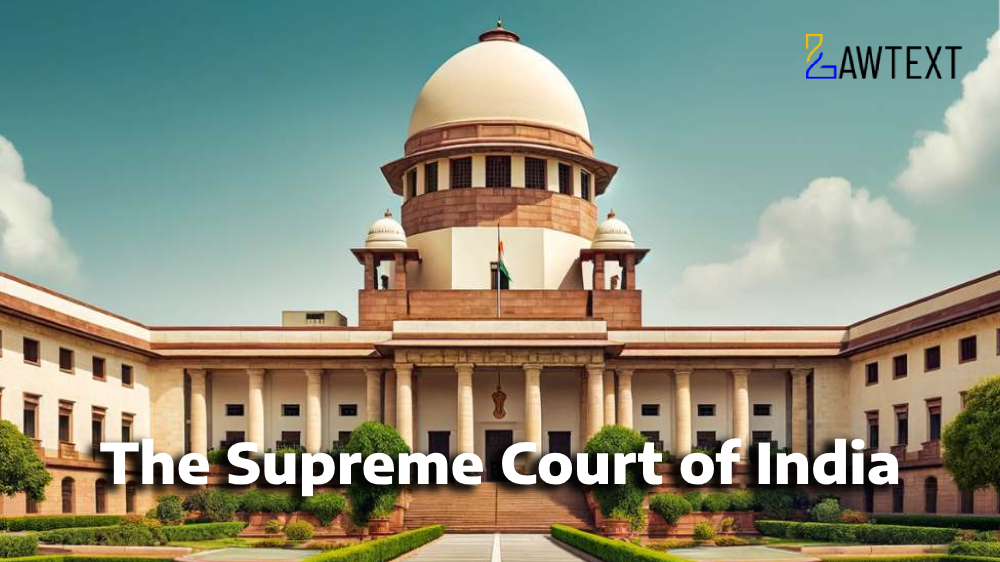
Supreme Court Interprets Court's Power Under Section 9 of Arbitration Act Post-Tribunal Constitution. The Court Held That Courts Can Entertain Section 9 Applications After Tribunal Constitution But Must Examine Efficacy of Section 17 Remedy, with 'Entertain' Encompassing Entire Adjudication Process Under the Arbitration and Conciliation Act, 1996.

  • 6
Judgement Image
Font size:
Print

Case Note & Summary

The dispute arose from a Cargo Handling Agreement between the parties, containing an arbitration clause. The appellant invoked arbitration via a notice dated November 22, 2020, and subsequently filed a Section 9 application for interim measures in the Commercial Court at Surat on January 15, 2021. The respondent also filed a Section 9 application on March 16, 2021. While these applications were pending, the High Court of Gujarat appointed a three-member Arbitral Tribunal on July 9, 2021, to adjudicate the disputes. The appellant then sought to refer the Section 9 applications to the tribunal, but the Commercial Court dismissed this request on July 16, 2021. The appellant challenged this order under Article 227 of the Constitution before the Gujarat High Court, which dismissed the petition on August 17, 2021, holding that the Commercial Court could consider the Section 9 applications after examining the efficacy of the Section 17 remedy. The core legal issues were whether a court retains power to entertain Section 9 applications post-tribunal constitution and the meaning of 'entertain' in Section 9(3), and whether courts must evaluate the effectiveness of the Section 17 remedy before granting interim relief under Section 9(1). The appellant argued that Section 9(3) restricts court power once a tribunal is constituted, emphasizing the amendment's intent to curtail court role and align with the UNCITRAL Model Law, while the respondent's arguments were not detailed in the provided text. The Supreme Court analyzed Sections 9 and 17 of the Arbitration and Conciliation Act, 1996, as amended in 2015, noting that Section 9(3) does not oust jurisdiction but requires courts to find circumstances rendering the Section 17 remedy inefficacious before entertaining applications. The court interpreted 'entertain' broadly to encompass the entire adjudication process, not merely admission. It referenced the Law Commission's 246th Report and the High-Level Committee's review to underscore the legislative aim of reducing court intervention and empowering arbitral tribunals with equivalent powers. The decision affirmed that courts have the power to entertain Section 9 applications post-tribunal constitution but must first assess the efficacy of the Section 17 remedy, with 'entertain' meaning the full process up to final order.

Headnote

A) Arbitration Law - Interim Measures - Court's Power Post-Tribunal Constitution - Arbitration and Conciliation Act, 1996, Section 9(3) - The Supreme Court considered whether a court can entertain a Section 9 application after an arbitral tribunal is constituted, interpreting 'entertain' broadly to include the entire adjudication process, not just admission. Held that Section 9(3) restricts but does not oust court jurisdiction, requiring examination of Section 17 remedy efficacy before granting relief under Section 9(1). (Paras 2, 21-24)

B) Arbitration Law - Interim Measures - Efficacy of Arbitral Tribunal Remedy - Arbitration and Conciliation Act, 1996, Sections 9(3), 17 - The Court addressed whether courts must assess if the Section 17 remedy is efficacious before ordering interim measures under Section 9(1) post-tribunal constitution. Held that courts are obliged to examine circumstances rendering Section 17 inefficacious, as per the 2015 Amendment's intent to reduce court role and empower tribunals. (Paras 2, 23, 25)

Subscribe to unlock Headnote Subscribe Now

Issue of Consideration

Whether the Court has the power to entertain an application under Section 9(1) of the Arbitration and Conciliation Act, 1996, once an Arbitral Tribunal has been constituted and the true meaning of 'entertain' in Section 9(3); whether the Court is obliged to examine the efficacy of the remedy under Section 17 before passing an order under Section 9(1) once an Arbitral Tribunal is constituted

Subscribe to unlock Issue of Consideration Subscribe Now

Final Decision

Supreme Court granted leave and addressed the legal questions, interpreting Section 9(3) to allow court power post-tribunal constitution but requiring examination of Section 17 remedy efficacy, with 'entertain' broadly defined

Law Points

  • Interpretation of Section 9(3) of the Arbitration and Conciliation Act
  • 1996
  • meaning of 'entertain'
  • court's power to examine efficacy of Section 17 remedy
  • interim measures by court and arbitral tribunal

Subscribe to unlock Law Points Subscribe Now

Case Details

2021 LawText (SC) (9) 80

Civil Appeal No. 5700 of 2021 [Arising out of Special Leave Petition (Civil) No.13129 of 2021]

2021-09-14

Indira Banerjee, J.

Mr. Darius Khambata, Senior Advocate

Arcelor Mittal Nippon Steel India Ltd.

Essar Bulk Terminal Ltd.

Subscribe to unlock Case Details (Citation, Judge, Date & more) Subscribe Now

Nature of Litigation

Civil appeal arising from arbitration dispute over Cargo Handling Agreement

Remedy Sought

Appellant sought reference of Section 9 applications to Arbitral Tribunal and challenged Commercial Court's order

Filing Reason

Disputes under Cargo Handling Agreement led to arbitration invocation and interim measure applications

Previous Decisions

Commercial Court dismissed appellant's application to refer Section 9 applications to tribunal; Gujarat High Court dismissed appellant's petition under Article 227, allowing Commercial Court to proceed with Section 9 applications

Issues

Whether the Court has the power to entertain an application under Section 9(1) of the Arbitration and Conciliation Act, 1996, once an Arbitral Tribunal has been constituted and the true meaning of 'entertain' in Section 9(3) Whether the Court is obliged to examine the efficacy of the remedy under Section 17 before passing an order under Section 9(1) of the Arbitration Act, once an Arbitral Tribunal is constituted

Submissions/Arguments

Appellant argued that Section 9(3) restricts court power post-tribunal constitution, with 'entertain' meaning entire adjudication process, and emphasized amendment intent to curtail court role Respondent's arguments not detailed in provided text

Ratio Decidendi

Section 9(3) of the Arbitration and Conciliation Act, 1996, does not oust court jurisdiction but restricts it post-tribunal constitution, requiring courts to find circumstances rendering Section 17 remedy inefficacious before entertaining Section 9 applications, with 'entertain' encompassing the entire adjudication process up to final order

Judgment Excerpts

The short question of law raised in this appeal is, whether the Court has the power to entertain an application under Section 9(1) of the Arbitration and Conciliation Act, 1996, hereinafter referred to as “the Arbitration Act”, once an Arbitral Tribunal has been constituted and if so, what is the true meaning and purport of the expression “entertain” in Section 9(3) of the Arbitration Act. Mr. Khambata argued that, the purpose of insertion of Section 9(3) of the Arbitration Act was to curtail the role of the Court. the High Court rightly held that the Commercial Court had erred in construing the word ‘entertain’ narrowly, observing that entertain would not mean admitting for consideration, but would mean the entire process upto its final adjudication and passing of an order on merits.

Procedural History

Appellant invoked arbitration on November 22, 2020; filed Section 9 application on January 15, 2021; respondent filed Section 9 application on March 16, 2021; Arbitral Tribunal appointed on July 9, 2021; appellant filed application to refer Section 9 applications to tribunal on July 16, 2021, dismissed by Commercial Court; appellant challenged under Article 227 in Gujarat High Court, dismissed on August 17, 2021; appeal to Supreme Court

Acts & Sections

  • Arbitration and Conciliation Act, 1996: Section 9, Section 9(1), Section 9(2), Section 9(3), Section 11, Section 17
  • Constitution of India: Article 227
  • Code of Civil Procedure, 1908:
Subscribe to unlock full Legal Analysis Subscribe Now
Related Judgement
Supreme Court Supreme Court Interprets Court's Power Under Section 9 of Arbitration Act Post-Tribunal Constitution. The Court Held That Courts Can Entertain Section 9 Applications After Tribunal Constitution But Must Examine Efficacy of Section 17 Remedy, with 'En...
Related Judgement
Supreme Court Supreme Court Allows Accused's Appeal in UAPA Case, Directing Provision of Redacted Statements of Protected Witnesses. The Court Held That Fair Trial Principles Under Section 207 Cr.P.C. Require Disclosure of Relevant Evidence, and Witness Protection...