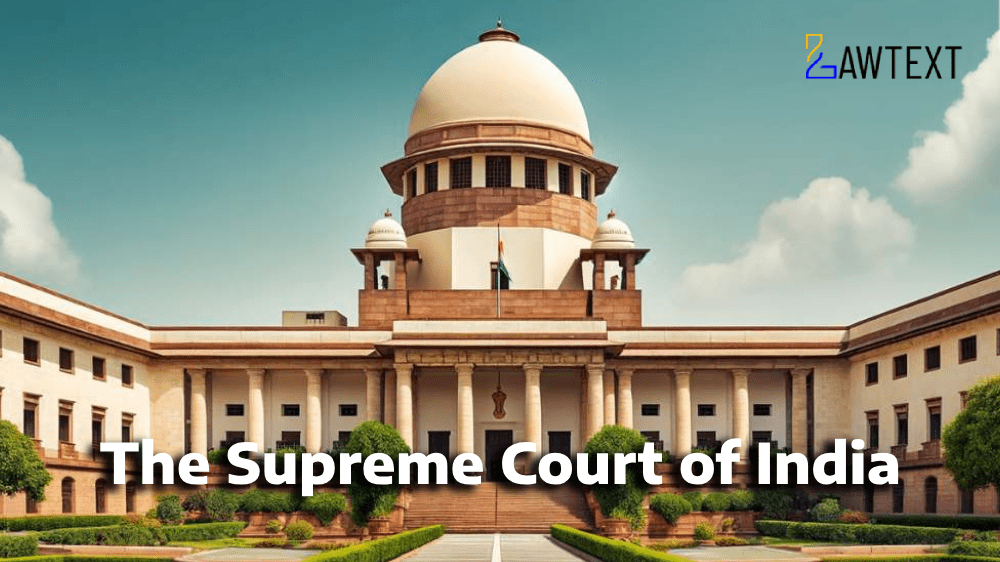
Case Note & Summary
The Supreme Court of India addressed a significant dispute regarding the distribution of legislative powers between the Union and the States, specifically concerning the taxation of mineral rights. The case focused on whether royalty on minerals, as outlined under the Mines and Minerals (Development and Regulation) Act (MMDR Act), should be considered a tax and whether State legislatures can impose taxes on mineral-bearing lands by using the value of minerals as a tax base. The Court examined the inter-relationship between various constitutional entries related to mines and minerals and provided clarity on the limitations imposed on State taxation powers.
A. Background Overview: The case involves the interpretation of legislative powers concerning taxation on mineral rights and the imposition of royalties under the MMDR Act. The conflict arose from differing judicial interpretations, particularly between the decisions in India Cement Ltd. v. State of Tamil Nadu and State of West Bengal v. Kesoram Industries Ltd. B. Issues Core Questions: The Court rephrased the central questions, focusing on whether royalty constitutes a tax, the extent of the State's taxing power under Entry 49 of List II, and the implications of limitations imposed by Parliament under Entry 50 of List II. C. Submissions Petitioners’ Arguments: Petitioners argued that royalty is a form of tax, and the State legislatures have limited power to tax mineral rights due to the MMDR Act's comprehensive regulation. Respondents’ Arguments: Respondents contended that royalty is not a tax, and States can impose taxes on mineral-bearing lands under Entry 49 of List II. D. Distribution of Legislative Fields Relating to Mines and Minerals Legislative Entries: The Court analyzed the distribution of legislative powers between the Union and States regarding the regulation and taxation of mines and minerals, focusing on the scope and limitations of Entries 23, 49, and 50 of List II. E. Underlying Constitutional Philosophy Interpretation of Legislative Entries: The judgment explored the interpretation of legislative entries and the principle of fiscal federalism, emphasizing the importance of balancing Union and State powers. F. Whether Royalty is Tax Nature of Royalty: The Court examined whether royalty under the MMDR Act qualifies as a tax, analyzing its characteristics and the legal implications of treating it as such. G. Inter-relationship Between Entries Entries 23 and 54: The Court explored the relationship between Entry 23 of List II (regulation of mines) and Entry 54 of List I (mineral development), determining the extent of State powers in relation to the MMDR Act. H. Conclusions Final Rulings: The judgment provided clarity on the nature of royalty, the extent of State legislative powers, and the limitations imposed by the Constitution on the taxation of mineral rights, resolving long-standing judicial ambiguities.
Issue of Consideration: Mineral Area Development Authority & Anr. Versus M/S Steel Authority of India & Anr Etc.
Premium Content
The Issue of Consideration is only available to subscribed members.
Subscribe Now to access critical case issues