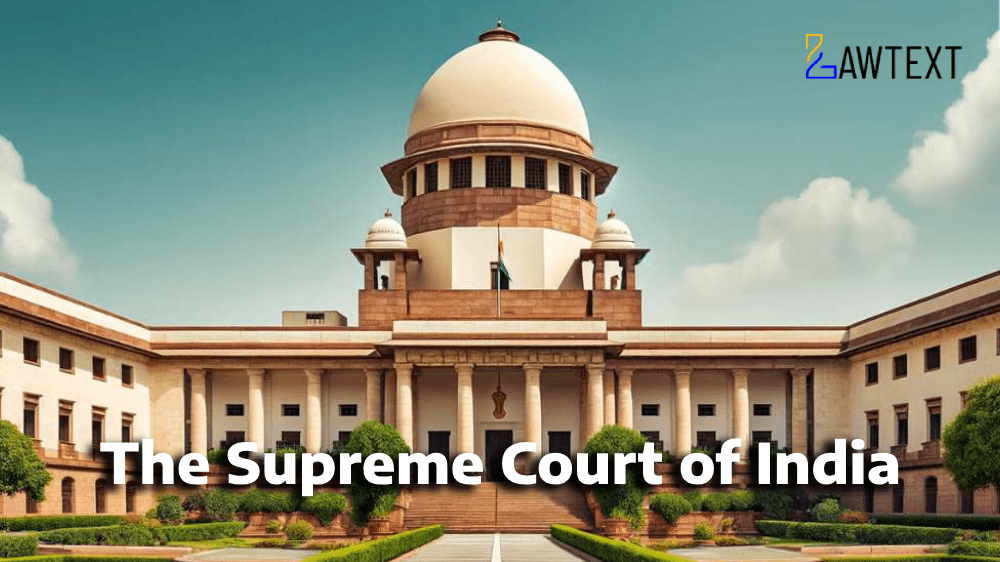
Case Note & Summary
The Supreme Court dismissed an appeal by Kanwal Tanuj, an IAS officer of the Bihar cadre, against the Patna High Court's order rejecting his petition to quash an FIR registered by the CBI. The FIR alleged that the appellant, as District Magistrate of Aurangabad, conspired with the CEO of Bhartiya Rail Bijlee Company Limited (BRBCL), a joint venture between NTPC (74% share) and the Ministry of Railways (26% share), to fraudulently record land in the name of a deceased person and cause wrongful loss of over Rs. 2 crore to BRBCL. The appellant argued that the CBI could not investigate him without prior consent of the Bihar Government under Section 6 of the Delhi Special Police Establishment Act, 1946, relying on a proviso in the general consent notification of 1996. The High Court held that BRBCL was a Central Government company, the conspiracy was hatched in Delhi, and the notification's proviso did not apply as the offences were in connection with the affairs of a Central Government company. The Supreme Court agreed, noting that the general consent covered offences under the Prevention of Corruption Act and IPC, and the proviso requiring prior consent for state government employees was not attracted because the offences related to a Central Government company. The Court found no merit in the appeal and dismissed it, upholding the CBI's jurisdiction to investigate.
Headnote
A) Criminal Law - CBI Investigation - Consent under Section 6 of Delhi Special Police Establishment Act, 1946 - General consent notification dated 19.2.1996 issued by Bihar Government - The proviso requiring prior consent for state government employees does not apply where the offences are committed in connection with the affairs of a Central Government company (BRBCL) and the conspiracy was hatched in Delhi - Held that the CBI was competent to investigate without prior state consent (Paras 7-10).
B) Criminal Law - Jurisdiction of CBI - Offences involving Central Government companies - The appellant, an IAS officer of Bihar cadre, was alleged to have conspired with officials of BRBCL, a company owned/controlled by the Central Government, to fraudulently acquire land and siphon funds - The High Court correctly held that the offences related to the affairs of a Central Government company and the conspiracy occurred in Delhi - Held that the CBI had jurisdiction to register and investigate the FIR (Paras 5-6).
C) Criminal Law - Quashing of FIR - Lack of consent under Section 6 of DSPE Act - The appellant sought quashing of FIR on the ground that CBI investigation without prior state consent was void ab initio - The Supreme Court upheld the High Court's decision rejecting the petition, finding no merit in the appellant's contention - Held that the appeal was dismissed (Para 11).
Issue of Consideration
Whether the CBI could investigate an IAS officer of the Bihar cadre without prior consent of the State Government under Section 6 of the Delhi Special Police Establishment Act, 1946, given the general consent notification of 1996 containing a proviso requiring prior consent for state government employees.
Final Decision
The Supreme Court dismissed the appeal, upholding the High Court's order. The Court held that the CBI was competent to register and investigate the FIR without prior consent of the State Government, as the offences related to the affairs of a Central Government company (BRBCL) and the conspiracy was hatched in Delhi. The proviso in the general consent notification did not apply.
Law Points
- Consent under Section 6 of Delhi Special Police Establishment Act
- 1946
- General consent notification
- Prior consent requirement for state government employees
- Jurisdiction of CBI over offences involving central government companies
- Interpretation of proviso in consent notification
Case Details
Criminal Appeal No. 414 of 2020 (Arising out of SLP(Crl.) No. 9876 of 2018)
Subscribe to unlock Case Details (Citation, Judge, Date & more)
Subscribe Now
Nature of Litigation
Criminal appeal against High Court order rejecting petition to quash FIR registered by CBI for offences under IPC and PC Act.
Remedy Sought
Quashing of FIR being R.C. A.C.I, 2018A 0002 dated 21.2.2018 registered by CBI under Sections 120B, 420, 467, 468, 471 IPC read with Section 13(1)(d) of PC Act.
Filing Reason
Appellant, an IAS officer, contended that CBI investigation without prior consent of State Government under Section 6 of DSPE Act was without jurisdiction and void ab initio.
Previous Decisions
High Court of Judicature at Patna rejected the writ petition (CWJC No. 879/2018) vide judgment dated 17.9.2018.
Issues
Whether the CBI could investigate the appellant, an IAS officer of Bihar cadre, without prior consent of the State Government under Section 6 of the Delhi Special Police Establishment Act, 1946?
Whether the proviso in the general consent notification dated 19.2.1996 required prior consent for investigating state government employees involved in offences related to Central Government companies?
Submissions/Arguments
Appellant argued that the FIR was registered without prior permission of the State Government, violating Section 6 of the 1946 Act, and thus void ab initio.
Appellant relied on the proviso in the general consent notification of 1996 which required prior consent for investigating public servants employed in connection with the affairs of the Government of Bihar.
Respondent (CBI/State) contended that BRBCL was a Central Government company, the conspiracy was hatched in Delhi, and the proviso did not apply as the offences were in connection with the affairs of a Central Government company.
Ratio Decidendi
The general consent under Section 6 of the Delhi Special Police Establishment Act, 1946, granted by the State of Bihar vide notification dated 19.2.1996, covers offences committed in connection with the affairs of the Government of India or any corporation, company or bank owned or controlled by the Government of India. The proviso requiring prior consent for state government employees does not apply where the offences are in connection with the affairs of a Central Government company, as the company is not owned or controlled by the State Government. Therefore, the CBI can investigate such offences without prior state consent.
Judgment Excerpts
The principal ground canvassed by the appellant before the High Court was that he being an officer of the Indian Administrative Service (IAS) employed in connection with the affairs of the Government of Bihar as District Magistrate at Aurangabad District (State of Bihar) could not be subjected to investigation by the CBI without the prior consent of the State.
The High Court after considering the grounds of challenge, proceeded to hold that BRBCL is an 'affiliate' or 'associate' in relation to National Thermal Power Company (NTPC) Ltd. and the Railways respectively.
The High Court then concluded that criminal conspiracy for committing the offence was thus hatched at Delhi and for all these reasons, the CBI was competent to register FIR at Delhi and to carry on investigation in that regard.
Procedural History
FIR registered by CBI on 21.2.2018. Appellant filed Criminal Writ Jurisdiction Case No. 879/2018 before Patna High Court seeking quashing of FIR. High Court rejected the petition on 17.9.2018. Appellant filed SLP(Crl.) No. 9876/2018 before Supreme Court, which was converted into Criminal Appeal No. 414/2020. Supreme Court dismissed the appeal on 4.3.2020.
Acts & Sections
- Delhi Special Police Establishment Act, 1946: Section 6
- Indian Penal Code, 1860: 120B, 420, 467, 468, 471
- Prevention of Corruption Act, 1988: 13(1)(d), 13(2)