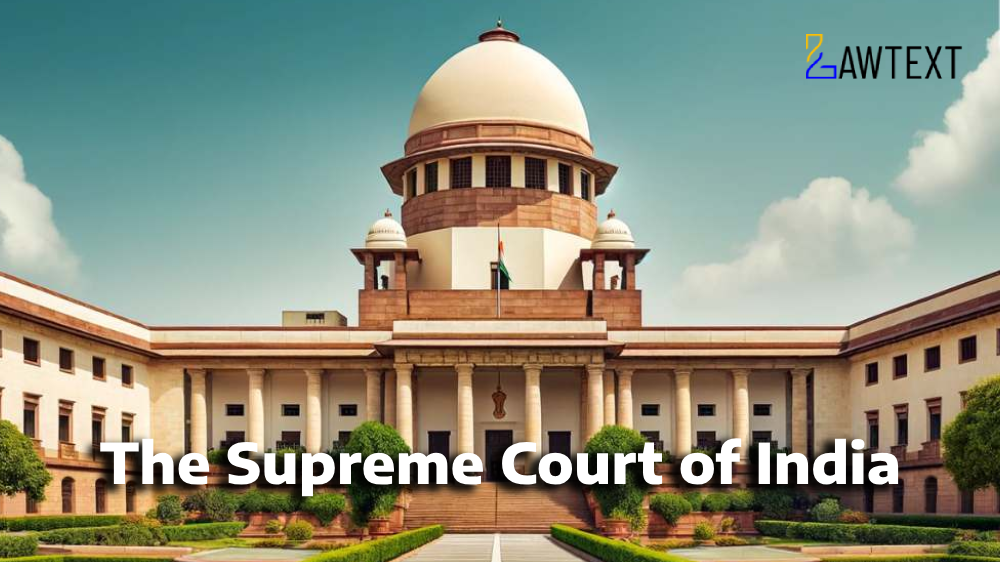
Supreme Court Dismisses Appeal Against Arbitral Award, Holds Legal Representatives Must Challenge Under Section 34 of Arbitration Act. The Court affirmed that the Arbitration Act is a complete code and legal heirs cannot bypass Section 34 by filing a revision under Article 227.

  • 8
Judgement Image
Font size:
Print

Case Note & Summary

The present appeal arose from a dispute over a Deed of Agreement for Sale dated 20.04.2007 between Mr. Appu John and Respondent No. 1. After Mr. Appu John's death on 28.07.2007, Respondent No. 1 initiated arbitration against Respondent No. 2, A. Philip, alleging violation of the agreement. The appellant, claimed to be the sole surviving legal heir of Mr. Appu John and asserted that Respondent No. 2 was falsely shown as the legal representative. An arbitral award dated 21.02.2011 was passed in favor of Respondent No. 1, directing execution of the sale deed. The appellant, who was not a party to the arbitration, challenged the award by filing a Civil Revision Petition under Article 227 of the Constitution before the Madras High Court. The High Court dismissed the petition, holding that the appropriate remedy lay under Section 34 of the Arbitration & Conciliation Act, 1996. The appellant appealed to the Supreme Court. The Supreme Court framed the issue of whether legal heirs must challenge an arbitral award under Section 34 or can resort to Article 227. The Court analyzed the scheme of the Arbitration Act, noting that it is a complete code and that Section 34 provides the exclusive remedy for setting aside an award. The Court interpreted the definition of 'legal representative' under Section 2(1)(g) and held that upon the death of a party, legal representatives step into the shoes of the deceased and are bound by the arbitration agreement under Section 40. Relying on Bhaven Construction and Ravi Prakash Goel, the Court held that legal representatives have the right to challenge an award under Section 34, and that Article 227 cannot be used to bypass the statutory remedy. The Court also rejected the appellant's inconsistent stand of claiming to be the sole legal heir while denying representation of the estate. Consequently, the appeal was dismissed, and the impugned order of the High Court was affirmed. The appellant was permitted to exercise remedies under the Arbitration Act.

Headnote

A) Arbitration Law - Challenge to Arbitral Award - Remedy of Legal Representatives - Section 34, Arbitration & Conciliation Act, 1996 - The issue was whether a legal heir, not a party to arbitration, can challenge an arbitral award under Article 227 instead of Section 34. The Court held that the Arbitration Act is a complete code and legal representatives step into the shoes of the deceased party; thus, the appropriate remedy is under Section 34, not Article 227. The High Court's dismissal of the revision petition was upheld. (Paras 9-22)

B) Arbitration Law - Legal Representative - Definition and Rights - Sections 2(1)(g), 35, 40, Arbitration & Conciliation Act, 1996 - The Court interpreted that a legal representative, as defined under Section 2(1)(g), is bound by and entitled to enforce an arbitration agreement. Under Section 40, the arbitration agreement is not discharged by death and is enforceable by or against legal representatives. Section 35 extends finality to persons claiming under the parties. Therefore, legal representatives have the right to challenge an award under Section 34. (Paras 16-20)

C) Arbitration Law - Judicial Interference - Exceptional Rarity - Section 34, Arbitration & Conciliation Act, 1996 - The Court reiterated that judicial interference beyond Section 34 must be exercised in 'exceptional rarity', as held in Bhaven Construction. The use of 'only' in Section 34 makes the enactment a complete code. (Paras 14-15)

Subscribe to unlock Headnote Subscribe Now

Issue of Consideration

Whether the appropriate remedy for legal heirs aggrieved by an arbitral award is a petition under Section 34 of the Arbitration & Conciliation Act, 1996 or a petition under Article 227 of the Constitution/Section 115 of the CPC

Subscribe to unlock Issue of Consideration Subscribe Now

Final Decision

The Supreme Court dismissed the appeal, affirming the High Court's order. The Court held that the appropriate remedy for a legal representative to challenge an arbitral award is under Section 34 of the Arbitration & Conciliation Act, 1996, and not under Article 227 of the Constitution or Section 115 of the CPC. The appellant was permitted to exercise remedies under the Arbitration Act.

Law Points

  • Arbitration Act is a complete code
  • Section 34 is the exclusive remedy for challenging arbitral awards
  • legal representatives step into the shoes of a deceased party
  • legal representatives can challenge awards under Section 34
  • Article 227 cannot be used to bypass statutory remedy

Subscribe to unlock Law Points Subscribe Now

Case Details

2026 LawText (SC) (04) 74

Civil Appeal No. ..... of 2026 (@ SLP (C) No. 16162/2023)

2026-04-20

SANJAY KAROL J. , VIPUL M. PANCHOLI J.

2026 INSC 393

V.K. John

S. Mukanchand Bothra and HUF (Died) Represented by LRs. & Ors.

Subscribe to unlock Case Details (Citation, Judge, Date & more) Subscribe Now

Nature of Litigation

Civil appeal against dismissal of civil revision petition challenging an arbitral award

Remedy Sought

Appellant sought to set aside the arbitral award and the High Court order dismissing his revision petition

Filing Reason

Appellant claimed to be the sole surviving legal heir of the deceased party to the arbitration agreement and alleged that the award was passed without hearing him

Previous Decisions

Arbitral award dated 21.02.2011 in favor of Respondent No. 1; High Court of Madras dismissed CRP No. 676/2013 on 03.02.2023, holding that remedy lies under Section 34 of the Arbitration Act

Issues

Whether the appropriate remedy for legal heirs aggrieved by an arbitral award is a petition under Section 34 of the Arbitration & Conciliation Act, 1996 or a petition under Article 227 of the Constitution/Section 115 of the CPC

Submissions/Arguments

Appellant: He was not a party to arbitration; the award is vitiated as he was not heard; the arbitrator made no enquiry into legal heirship; only recourse was Article 227 as he cannot challenge under Section 34 being a non-party. Respondent No. 3: Relied on Bhaven Construction and Ravi Prakash Goel to argue that since appellant claims to be legal heir, remedy lies under Section 34. Amici Curiae: No binding arbitration agreement inter se parties; award not executable against successors-in-interest.

Ratio Decidendi

The Arbitration Act is a complete code; Section 34 provides the exclusive remedy for setting aside an arbitral award. Legal representatives step into the shoes of a deceased party and are bound by the arbitration agreement under Section 40. Therefore, they have the right to challenge an award under Section 34, and cannot bypass this remedy by filing a revision under Article 227.

Judgment Excerpts

The appropriate relief for a legal representative to challenge an arbitral award is under Section 34 of the Arbitration Act and not under Article 227 of the Constitution /Section 115 of the CPC. The Arbitration Act is a complete Code in itself. Judicial interference beyond the scope and procedure enumerated under Section 34, must be exercised in 'exceptional rarity'. When the scheme of the Act is towards continuity of arbitral proceedings, in the event of death of a party, the natural corollary... is that upon the death of a party, legal representatives' step into the shoes of a party for the purposes of the Act. Denying a legal representative the right to challenge an award under Section 34, would defeat the very object of the Arbitration Act.

Procedural History

Arbitration Case No. 1/2011 initiated by Respondent No. 1 against Respondent No. 2; Arbitral Award dated 21.02.2011; Execution Petition E.P. No. 17 of 2012 filed on 10.08.2011; Appellant impleaded in execution petition vide order dated 14.09.2021 in A. Nos. 3800-3802 of 2012; Appellant filed CRP No. 676/2013 before Madras High Court challenging the award; High Court dismissed CRP on 03.02.2023; Appellant filed SLP (C) No. 16162/2023 before Supreme Court; Leave granted and Civil Appeal decided on 2026.

Acts & Sections

  • Arbitration & Conciliation Act, 1996: Section 2(1)(g), Section 34, Section 35, Section 40
  • Code of Civil Procedure, 1908: Section 115
  • Constitution of India: Article 227
Subscribe to unlock full Legal Analysis Subscribe Now
Related Judgement
Supreme Court Supreme Court Dismisses Appeal Against Arbitral Award, Holds Legal Representatives Must Challenge Under Section 34 of Arbitration Act. The Court affirmed that the Arbitration Act is a complete code and legal heirs cannot bypass Section 34 by filing a...
Related Judgement
Supreme Court Supreme Court Allows State's Appeal in Blacklisting Case, Reinstating Order Against Contractor for Negligence in Public Works. The Court Held That the Blacklisting Procedure Complied with Natural Justice and Was Not Predetermined, and the Punishment ...